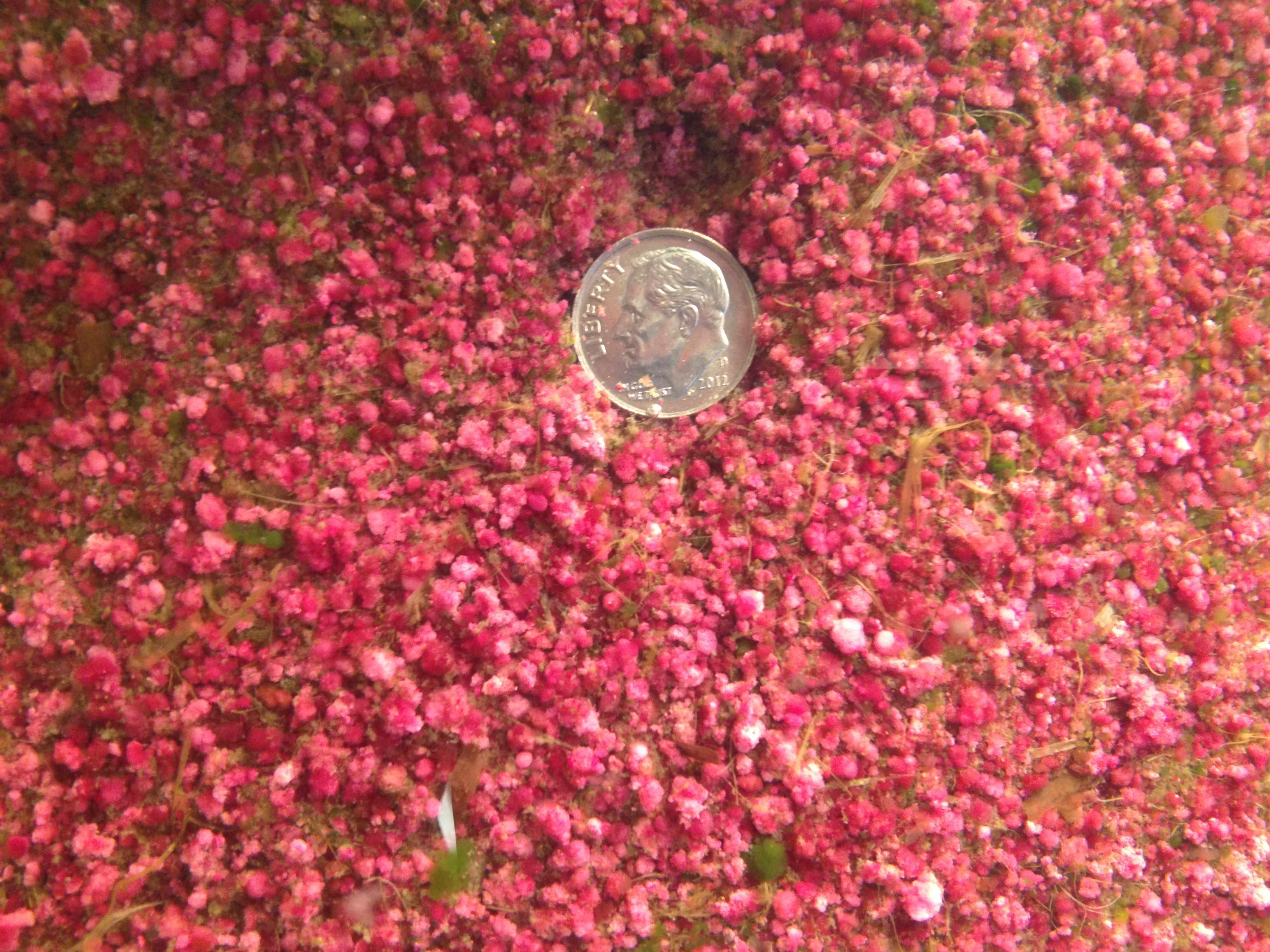
Pictured above: “Pink berry” microbial communities are consortia of bacteria commonly found on sediment. A dime provides scale.
Three UCSB Science teams are among six projects receiving bridge funding to pursue bold ideas at the frontiers of science and engineering.
An investment from the W. M. Keck Foundation is helping UC Santa Barbara researchers push forward with ambitious, high-impact work across science and engineering — advancing discoveries that could reshape fields ranging from materials science to climate research.
Through the foundation’s Bridge Funding Initiative, UCSB has been awarded $1.2 million to support six innovative research projects led by early- and midcareer faculty and their graduate students. The program is designed to accelerate promising ideas at critical stages, enabling researchers to sustain momentum and pursue transformative breakthroughs. At UCSB, the selected projects reflect the university’s strength in interdisciplinary collaboration and its commitment to advancing fundamental science with real-world potential.
“We are deeply grateful to the W. M. Keck Foundation for its continued partnership with UCSB and for recognizing the importance of supporting bold, early-stage research,” said Rachel Segalman, vice chancellor for research and professor of materials and chemical engineering. “Supporting our faculty and students is essential to advancing discovery and enabling them to pursue ideas that can open entirely new directions in science and engineering.”
Advancing bold ideas across disciplines
The six funded projects span a wide range of fields, united by a shared goal: uncovering new knowledge that can drive innovation and deepen our understanding of complex systems.
Unlocking new possibilities in superconductors
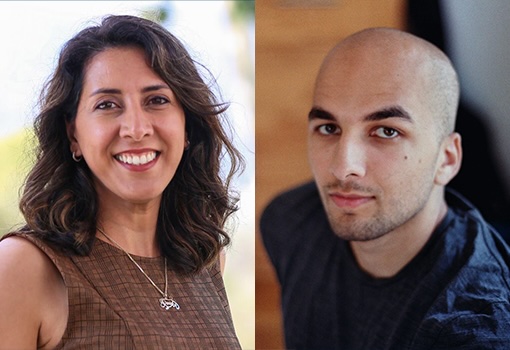
Elaheh Ahmadi, an associate professor of electrical and computer engineering, and doctoral student Navid Kafi are exploring how introducing disorder into materials may enhance their ability to conduct electricity without resistance, a counterintuitive idea that could influence future electronics and quantum technologies.
“Bridge funding acts as a vital safety net that sustains research during the ‘gap’ between major grants,” said Ahmadi, who holds the Mehrabian Endowed Career Development Chair. “It is critical for innovation because it allows researchers to gather the preliminary data needed to prove a high-risk idea is viable. For graduate students, it provides financial stability, ensuring their stipends and research can continue without interruption.”
While conventional nitrides have already revolutionized lighting and power electronics, the project focuses on quaternary transition-metal nitrides, an emerging class of materials with significant superconducting potential. To study these complex systems, the team will synthesize ultrathin films using modified molecular beam epitaxy, an advanced growth technique that enables atomic-level control over composition and structure. This allows researchers to precisely tune film composition and observe how it influences superconducting behavior.
“Superconductivity is a state where electricity flows with zero friction, meaning no energy is lost as heat,” Ahmadi said. “We see the importance of this technology today in MRI scanners and in quantum computing, where superconducting circuits are used to build qubits.”
For Kafi, the opportunities provided by the project are both practical and deeply motivating.
“The Keck Bridge funding allows me to maximize the time that I can spend on our research and setting up the tool needed for this project, which is the work I enjoy doing the most,” he said. “This project presents an opportunity for me to work on something bold, which is exactly the type of science I want to do.”
Building cellular “rooms” from scratch
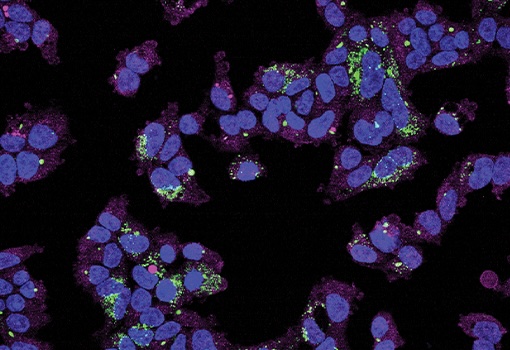
With support from the W. M. Keck Foundation Bridge Funding Initiative, Brooke Gardner, an assistant professor of molecular, cellular and developmental biology, and doctoral student Soham Chowdhury are advancing fundamental discoveries in cell biology — seeking to understand how cells build one of their most essential internal structures from the ground up.
Their project, Building an Organelle from Scratch: A New Model for De Novo Peroxisome Biogenesis, focuses on peroxisomes, small but vital compartments within cells that help regulate metabolism and enable cells to specialize. Despite their importance, scientists still do not fully understand how new peroxisomes form. The Keck grant has enabled the team to carry out a large-scale genetic screen, testing the role of hundreds of genes at a critical moment in the project.
“We are so appreciative of the Keck funding — it really came at an important time for continuing our momentum,” Gardner said. “The Keck Bridge funding allowed us to purchase the siRNA library to test hundreds of genes at a time, and Soham was able to do the screen he had been planning for the past year.”
For Chowdhury, a fifth-year doctoral student, the impact has been immediate.
“The Keck Bridge funding has already been transformative for my journey in the Ph.D. program,” he said. “At a time when science funding and budgets are increasingly stretched thin, ambitious exploratory projects are often hard to find resources for.”
To explain their research, Gardner compares the cell to a house.
“Our bodies have organs, which are tissues dedicated to specific functions, and our cells have organelles, which are regions dedicated to specific functions,” Gardner said. “Usually, the borders of these regions are defined by a membrane, similar to the walls in a house that separate different rooms. So how do you build a new room? And how do you define the room as something with an entirely new function in your house, such as a gym or a greenhouse? I think it is a really interesting question because it gets at how a cell defines the identity of each of its organelles and how malleable that identity is.”
Chowdhury offers a complementary analogy, describing the cell as a factory where machines must be delivered to the right location.
“My job is to figure out the shipping system the factory uses to send the machines to the right location: the peroxisome,” he said.
Early findings have already challenged conventional thinking.
“The first candidate that came out of our screen was completely unexpected,” Gardner said, pointing to evidence that cellular machinery previously thought to be unrelated may play a role in building new peroxisomes.
Chowdhury added that the team has uncovered “interesting novel genes that we never expected to be involved,” discoveries that have evolved from puzzling observations into “a very robust finding.”
Beyond advancing basic science, the research holds long-term promise. Peroxisomes are linked to rare genetic disorders that cause symptoms ranging from hearing loss to neurodegeneration, and they are increasingly being explored as tools for engineering new cellular functions.
“We are definitely still at the stages of asking very fundamental questions,” Gardner said, “but we are hopeful that what we learn will help us understand how to treat these disorders.”
For Chowdhury, the opportunity is both scientific and personal.
“This funding will allow me to complete my Ph.D. with the rigor and attention to detail the science deserves, while advancing our understanding of mechanisms fundamental to cell biology,” he said.
Linking landscape change to climate systems
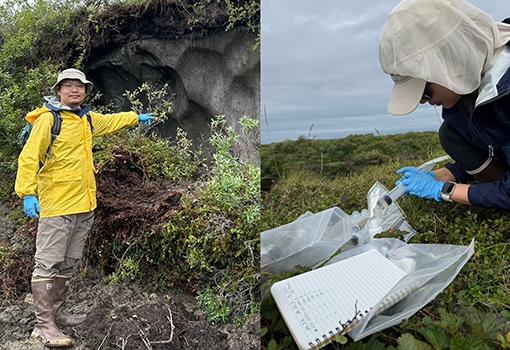
Gen Li, an assistant professor of earth science, and doctoral candidate Fan Liu are examining how changes to Earth’s surface, particularly in the Arctic, may be releasing carbon into the atmosphere far more quickly than previously understood.
Their project, Erosion-Driven Carbon Release: Decoding the Missing Carbon Pathway in a Thawing Arctic, challenges the long-held belief that erosion — processes that break down and transport Earth materials — influences the carbon cycle and climate only over tens of thousands to millions of years. Their research suggests erosion driven by a warming climate could influence carbon release on timescales that matter today.
“We truly appreciate the generous, timely support from the Keck Foundation, which allows us to pursue this exciting idea,” Li said. “The funding means both strong support and significant motivation to tackle scientific problems that are of fundamental and societal importance.”
At the center of the work is permafrost, frozen Arctic ground that stores vast amounts of ancient carbon. As permafrost thaws, breaks down and is transported, erosion exposes that ancient carbon and triggers physical and biochemical processes that allow it to “leak,” or enter the atmosphere as carbon dioxide.
“The scientific community still does not fully understand where, how fast and through what processes this leak happens, which introduces major uncertainties into future climate projections,” Li said. “This project looks into the mechanism and rate of carbon emission through the erosion pathway.”
For Liu, the Keck Bridge funding comes at a critical moment.
“This funding comes at an important stage in my Ph.D., allowing me to complete both fieldwork in Alaska and lab work targeting an important scientific problem,” she said.
Early findings suggest that long-stored carbon is already entering today’s climate system.
“Our preliminary results show that river water contains carbon spanning a wide range of ages, from modern to thousands of years old, suggesting that very old carbon stored in permafrost is ‘leaking’ into the active carbon cycle,” Liu said.
By revealing how quickly these processes may unfold, the research could reshape how scientists understand the relationship between landscapes and climate and improve predictions of future change.
Rethinking how cells move
Angela Pitenis, an associate professor of materials, and doctoral student Anthea Li are exploring how physical forces, specifically frictional shear stress, can influence how cells move, introducing a fundamentally new way of understanding cell behavior.
Their project, Mutaxis: A New Paradigm of Friction-Mediated Migration, challenges long-standing models that explain cell movement primarily through biochemical signals. Instead, their research asks whether friction itself can act as a guiding force, shaping how cells migrate in complex environments.
“For decades, we have largely ignored the physical resistance to motion, or friction, associated with cell migration,” Pitenis said. “However, cells are living materials navigating a physical world. We aim to uncover the tribological mechanisms, including static and kinetic friction, that drive cell motion in confinement, such as when a cell must physically wedge itself between dense tissue layers or slip through narrow vascular gaps.”
The question has far-reaching implications. If friction can direct cell movement, it could open new pathways for controlling processes such as tissue regeneration, wound healing and the spread of cancer. The team is particularly interested in how reduced friction may enable cancer cells to move more easily through confined spaces, offering new insight into metastasis.
“The Keck Foundation Bridge Funding is a vital catalyst for our work and has provided the resources to pursue high-risk, high-reward hypotheses at the intersection of materials science, soft matter physics and biology,” Pitenis said.
With this support, the team will use custom-built tribometers with integrated confocal microscopy to characterize the extent to which frictional shear stresses affect cell migration. Their work could ultimately establish friction as a new “design parameter” for engineering materials and therapies that guide cell behavior.
Engineering living materials from nature
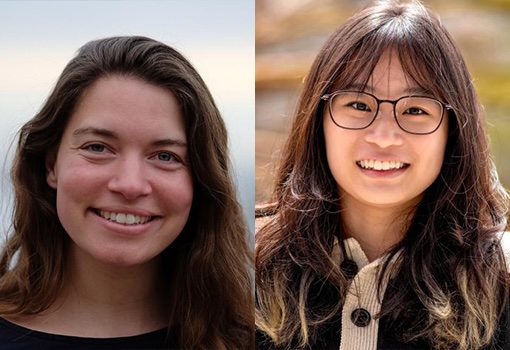
Elizabeth Wilbanks, an assistant professor of ecology, evolution and marine biology, and doctoral student Victoria Jones are studying how microbial communities naturally build strong, resilient materials — work that could inspire a new generation of sustainable, bioengineered systems.
Their project, Genes-to-Gels: Toughness and Resilience of Biofilm-Enabled Materials, focuses on biofilms, complex structures formed by communities of bacteria that produce a protective, glue-like matrix.
“The Keck Bridge funding has been a critical lifeline for our research project, after our Department of Defense funding was cut three years early,” Wilbanks said. “With Keck support, we have been able to maintain our momentum at a critical time — investigating key material properties of some remarkable natural biofilms.”
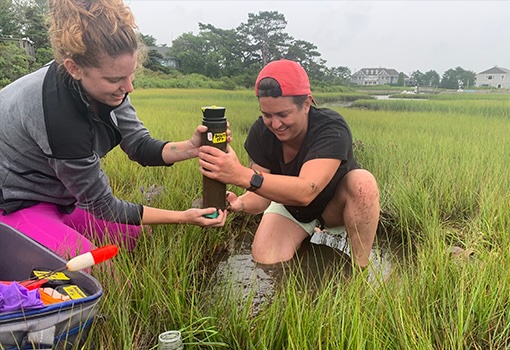
At the center of the work is a striking natural system known as “pink berries,” millimeter-scale microbial communities that persist in the same locations year after year. Despite exposure to environmental stresses such as ultraviolet radiation and water flow, the biofilms remain stable and consistently host the same species in tightly organized structures.
“How do they do it?” Wilbanks said. “We are taking a ‘learn from nature’ approach to developing rules for community assembly and discovering novel materials, from protein meshes to complex carbohydrates, that create a remarkably soft but resilient matrix holding the cells together.”
These systems combine properties rarely found together in engineered materials: They are extremely soft, yet highly elastic and resistant to damage.
With support from Keck, the team is also advancing new experimental approaches through UCSB’s ExFab Biofoundry, where researchers are developing methods to cultivate and isolate the microbial communities using specialized anaerobic chambers equipped with high-throughput imaging and liquid-handling tools.
By combining mechanical testing, genomic analysis and controlled cultivation, the researchers aim to understand not only what materials the microbes produce, but how they produce them — and why those materials perform so well.
The implications extend beyond the laboratory. Insights from the work could inform more efficient wastewater treatment systems, support engineered microbial communities for sustainable chemical production and lead to the discovery of new classes of soft, resilient materials.
Visualizing the mechanics of gene control
Enoch Yeung, an associate professor of mechanical engineering, and doctoral candidate Aleczander Taylor are developing a first-of-its-kind system to observe how DNA physically behaves during gene activity, making visible processes that have long been inferred but never directly seen.
Their project centers on a single-molecule imaging platform that tracks how CRISPR interference proteins interact with DNA and influence its mechanical properties, including twisting and supercoiling. While CRISPR is widely known as a gene-editing tool, Yeung’s team is investigating a deeper layer of biology in which physical forces help shape gene expression.
“For nearly 20 years, researchers in the field have gotten faster and faster with creating and editing synthetic DNA,” Yeung said. “In 2025, my group conducted a study that allowed us to visualize how gene editing affects the topology of DNA. We found that gene editing distorts how DNA twists, like how a stone thrown into a pond creates ripples. This project seeks to understand whether and how CRISPRi proteins alter that ripple landscape.”
DNA topology refers to how DNA is physically arranged — how it twists, coils and folds in space — much like a telephone cord that can become tightly wound or loosely relaxed. Those physical changes are not merely structural; they can influence how genes turn on and off.
“When genes are expressed, those strands are unwound and the twist is spread to other portions of the DNA,” Yeung said. “Mechanical, torsional stress from twist is a real signal that creates measurable changes in gene expression.”
After five years of development, Yeung’s lab, led by postdoctoral researchers Lili Yang and Yanran Wang, built an experimental system capable of stretching and imaging individual DNA molecules while tracking gene activity in real time — something Yeung said “has never been done before.”
For Taylor, a fifth-year doctoral candidate, the ability to observe those interactions directly marks a turning point.
“One of the frustrating aspects of working with molecular biology as an engineer is not being able to see the mechanisms at work,” he said. “The ability to visualize these DNA-protein interactions allows us to create a more complete understanding of processes we were previously blind to.”
Early findings are already reshaping how researchers understand gene regulation. The team has observed that DNA twist can become highly localized through the activity of RNA polymerases, forming tightly wound regions that can activate or repress nearby genes.
By revealing how mechanical forces move along DNA, the work could influence the design of gene therapies and synthetic biology systems and move researchers toward more predictive control of gene expression.
“I hope that my work will expand our understanding of how bacteria make complex control decisions and ultimately provide us with new ways of programming them to produce useful outcomes,” Taylor said.
The Keck Foundation’s support comes at a pivotal moment, providing critical stability for both the research and the researchers behind it.
“We will be able to perform single-molecule imaging studies of CRISPR and DNA topology that no group has ever attempted before,” Yeung said. “We are tremendously grateful for the innovative, high-risk and high-reward experiments we can pursue with the Keck Foundation’s support.”
“Receiving this funding has given me the stability to pursue the kind of fundamental, high-risk science that defines an impactful Ph.D. experience,” Taylor said.

Investing in discovery at pivotal moments
The Keck Foundation’s support is particularly significant for junior faculty members and their graduate students because it enables research at key stages, when new ideas are taking shape and are poised to make a significant impact.
The partnership reflects a shared commitment between UCSB and the Keck Foundation to advance bold, interdisciplinary research that expands the boundaries of knowledge. By supporting projects that challenge conventional thinking and explore new frontiers, the initiative helps ensure that promising ideas continue moving from discovery toward impact.
About the W. M. Keck Foundation
The W. M. Keck Foundation was established in 1954 in Los Angeles by William Myron Keck, founder of The Superior Oil Company. One of the nation’s largest philanthropic organizations, the W. M. Keck Foundation supports outstanding science, engineering and medical research. The Foundation also supports undergraduate education and maintains a program within Southern California to support arts and culture, education, health and community service projects.