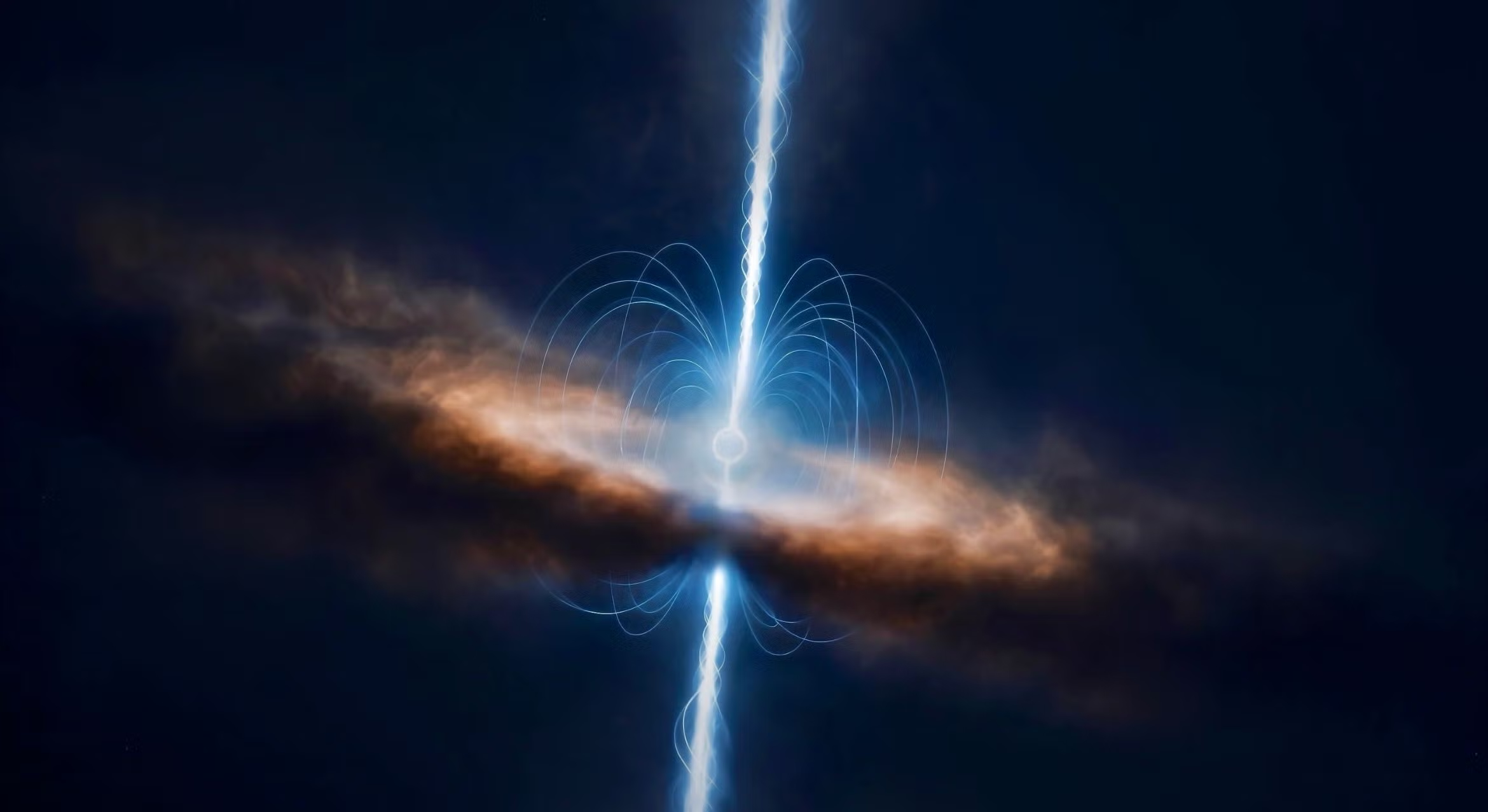
Las Cumbres Observatory tracking confirms magnetars as internal engines of exploding stars
Physics graduate student Joseph Farah has confirmed a theory of stellar death by applying general relativity to a superluminous supernova. Working with Andy Howell and the Las Cumbres Observatory, the team identified a periodic "chirp" that signals the presence of a wobbling magnetar. "It is the first time general relativity has been invoked to describe the mechanics of a supernova," Farah said.
According to Farah's model, the fabric of space-time is twisted by the spinning star, creating a strobing effect as a disk wobbles. The paper, appearing in Nature, establishes a new class of phenomena for future study in the Department of Physics. Howell called the discovery "the smoking gun" for the magnetar model, transforming one of several competing hypotheses into an observationally confirmed mechanism. Read the full story on The Current.
Photo Credit: Joseph Farah and Curtis McCully of LCO